Call us:864-276-1133 Mon-Fr:8:30am-5:00pm EST
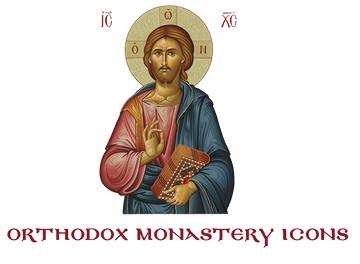
St. Nektarios icon
Orthodox icon of Saint Nectarios, Nektarius, Nektarios of Aegina, the Metropolitan of Pentapolis.
Commemorated November 9.
Saint Nectarios, the great wonderworker of modern times, was born Anastasius Kephalas in Selebria, Thrace on October 1, 1846. On November 7, 1875, Anastasius received monastic tonsure at the Nea Moni Monastery on Chios, and the new name Lazarus. Two years later, he was ordained a deacon. On that occasion, his name was changed to Nectarius. Later, when he was a priest, Fr Nectarius left Chios and went to Egypt. There he was elected Metropolitan of Pentapolis. Some of his colleagues became jealous of him because of his great virtues, because of his inspiring sermons, and because of everything else which distinguished St Nectarius from them.
Other Metropolitans and bishops of the Patriarchate of Alexandria became filled with malice toward the saint, so they told Patriarch Sophronius that Nectarius was plotting to become patriarch himself. They told the patriarch that the Metropolitan of Pentapolis merely made an outward show of piety in order to win favor with the people. So the patriarch and his synod removed St Nectarius from his See. Patriarch Sophronius wrote an ambiguous letter of suspension which provoked scandal and speculation about the true reasons for the saint's removal from his position. St Nectarius was not deposed from his rank, however.
He was still allowed to function as a bishop. If anyone invited him to perform a wedding or a baptism he could do so, as long as he obtained permission from the local bishop. St Nectarius bore his trials with great patience, but those who loved him began to demand to know why he had been removed. Seeing that this was causing a disturbance in the Church of Alexandria, he decided to go to Greece. He arrived in Athens to find that false rumors about him had already reached that city.
His letter of suspension said only that he had been removed for reasons known to the Patriarchate, and so all the slanders about him were believed. Since the state and ecclesiastical authorities would not give him a position, the former Metropolitan was left with no means of support, and no place to live. Every day he went to the Minister of Religion asking for assistance. They soon tired of him and began to mistreat him. One day, as he was leaving the Minister's office, St Nectarius met a friend whom he had known in Egypt.
Surprised to find the beloved bishop in such a condition, the man spoke to the Minister of Religion and Education and asked that something be found for him. So, St Nectarius was appointed to be a humble preacher in the diocese of Vitineia and Euboea. The saint did not regard this as humiliating for him, even though a simple monk could have filled that position. He went to Euboea to preach in the churches, eagerly embracing his duties. Yet even here, the rumors of scandal followed him. Sometimes, while he was preaching, people began to laugh and whisper.
Therefore, the blameless one resigned his position and returned to Athens. By then some people had begun to realize that the rumors were untrue, because they saw nothing in his life or conversation to suggest that he was guilty of anything. With their help and influence, St Nectarius was appointed Director of the Rizarios Seminary in Athens on March 8, 1894. He was to remain in that position until December of 1908. The saint celebrated the services in the seminary church, taught the students, and wrote several edifying and useful books. Since he was a quiet man, St Nectarius did not care for the noise and bustle of Athens. He wanted to retire somewhere where he could pray.
On the island of Aegina he found an abandoned monastery dedicated to the Holy Trinity, which he began to repair with his own hands. He gathered a community of nuns, appointing the blind nun Xenia as abbess, while he himself served as Father Confessor. Since he had a gift for spiritual direction, many people came to Aegina to confess to him. Eventually, the community grew to thirty nuns. He used to tell them, I am building a lighthouse for you, and God shall put a light in it that will shine forth to the world. Many will see this light and come to Aegina. They did not understand what he was telling them, that he himself would be that beacon, and that people would come there to venerate his holy relics.
On September 20, 1920 the nun Euphemia brought an old man in black robes, who was obviously in pain, to the Aretaieion Hospital in Athens. This was a state hospital for the poor. The intern asked the nun for information about the patient. Is he a monk? he asked. No, he is a bishop. The intern laughed and said, Stop joking and tell me his name, Mother, so that I can enter it in the register.He is indeed a bishop, my child. He is the Most Reverend Metropolitan of Pentapolis.The intern muttered, For the first time in my life I see a bishop without a Panagia or cross, and more significantly, without money.
Then the nun showed the saint's credentials to the astonished intern who then admitted him. For two months St Nectarius suffered from a disease of the bladder. At ten thirty on the evening of November 8, 1920, he surrendered his holy soul to God. He died in peace at the age of seventy-four. In the bed next to St Nectarius was a man who was paralyzed. As soon as the saint had breathed his last, the nurse and the nun who sat with him began to dress him in clean clothing to prepare him for burial at Aegina.
They removed his sweater and placed it on the paralyzed man's bed. Immediately, the paralytic got up from his bed, glorifying God. St Nectarius was buried at the Holy Trinity Monastery on Aegina. Several years later, his grave was opened to remove his bones (as is the custom in Greece). His body was found whole and incorrupt, as if he had been buried that very day. Word was sent to the Archbishop of Athens, who came to see the relics for himself. Archbishop Chrysostomos told the nuns to leave them out in the sun for a few days, then to rebury them so that they would decay.
A month or two after this, they opened the grave again and found the saint incorrupt. Then the relics were placed in a marble sarcophagus. Several years later, the holy relics dissolved, leaving only the bones. The saint's head was placed in a bishop's mitre, and the top was opened to allow people to kiss his head. Both during his life and after his death, St Nectarius has performed thousands of miracles, especially for those suffering from cancer. There are more churches dedicated to St Nectarius than to any other modern Orthodox Saint.
Reference: G.O.A.A.
St. Nektarios icon (2)
Orthodox icon of Saint Nectarios, Nektarius, Nektarios of Aegina, the Metropolitan of Pentapolis (2).
Commemorated November 9.
Saint Nectarios, the great wonderworker of modern times, was born Anastasius Kephalas in Selebria, Thrace on October 1, 1846. On November 7, 1875, Anastasius received monastic tonsure at the Nea Moni Monastery on Chios, and the new name Lazarus. Two years later, he was ordained a deacon. On that occasion, his name was changed to Nectarius. Later, when he was a priest, Fr Nectarius left Chios and went to Egypt. There he was elected Metropolitan of Pentapolis. Some of his colleagues became jealous of him because of his great virtues, because of his inspiring sermons, and because of everything else which distinguished St Nectarius from them.
Other Metropolitans and bishops of the Patriarchate of Alexandria became filled with malice toward the saint, so they told Patriarch Sophronius that Nectarius was plotting to become patriarch himself. They told the patriarch that the Metropolitan of Pentapolis merely made an outward show of piety in order to win favor with the people. So the patriarch and his synod removed St Nectarius from his See. Patriarch Sophronius wrote an ambiguous letter of suspension which provoked scandal and speculation about the true reasons for the saint's removal from his position. St Nectarius was not deposed from his rank, however.
He was still allowed to function as a bishop. If anyone invited him to perform a wedding or a baptism he could do so, as long as he obtained permission from the local bishop. St Nectarius bore his trials with great patience, but those who loved him began to demand to know why he had been removed. Seeing that this was causing a disturbance in the Church of Alexandria, he decided to go to Greece. He arrived in Athens to find that false rumors about him had already reached that city.
His letter of suspension said only that he had been removed for reasons known to the Patriarchate, and so all the slanders about him were believed. Since the state and ecclesiastical authorities would not give him a position, the former Metropolitan was left with no means of support, and no place to live. Every day he went to the Minister of Religion asking for assistance. They soon tired of him and began to mistreat him. One day, as he was leaving the Minister's office, St Nectarius met a friend whom he had known in Egypt.
Surprised to find the beloved bishop in such a condition, the man spoke to the Minister of Religion and Education and asked that something be found for him. So, St Nectarius was appointed to be a humble preacher in the diocese of Vitineia and Euboea. The saint did not regard this as humiliating for him, even though a simple monk could have filled that position. He went to Euboea to preach in the churches, eagerly embracing his duties. Yet even here, the rumors of scandal followed him. Sometimes, while he was preaching, people began to laugh and whisper.
Therefore, the blameless one resigned his position and returned to Athens. By then some people had begun to realize that the rumors were untrue, because they saw nothing in his life or conversation to suggest that he was guilty of anything. With their help and influence, St Nectarius was appointed Director of the Rizarios Seminary in Athens on March 8, 1894. He was to remain in that position until December of 1908. The saint celebrated the services in the seminary church, taught the students, and wrote several edifying and useful books. Since he was a quiet man, St Nectarius did not care for the noise and bustle of Athens. He wanted to retire somewhere where he could pray.
On the island of Aegina he found an abandoned monastery dedicated to the Holy Trinity, which he began to repair with his own hands. He gathered a community of nuns, appointing the blind nun Xenia as abbess, while he himself served as Father Confessor. Since he had a gift for spiritual direction, many people came to Aegina to confess to him. Eventually, the community grew to thirty nuns. He used to tell them, I am building a lighthouse for you, and God shall put a light in it that will shine forth to the world. Many will see this light and come to Aegina. They did not understand what he was telling them, that he himself would be that beacon, and that people would come there to venerate his holy relics.
On September 20, 1920 the nun Euphemia brought an old man in black robes, who was obviously in pain, to the Aretaieion Hospital in Athens. This was a state hospital for the poor. The intern asked the nun for information about the patient. Is he a monk? he asked. No, he is a bishop. The intern laughed and said, Stop joking and tell me his name, Mother, so that I can enter it in the register.He is indeed a bishop, my child. He is the Most Reverend Metropolitan of Pentapolis.The intern muttered, For the first time in my life I see a bishop without a Panagia or cross, and more significantly, without money.
Then the nun showed the saint's credentials to the astonished intern who then admitted him. For two months St Nectarius suffered from a disease of the bladder. At ten thirty on the evening of November 8, 1920, he surrendered his holy soul to God. He died in peace at the age of seventy-four. In the bed next to St Nectarius was a man who was paralyzed. As soon as the saint had breathed his last, the nurse and the nun who sat with him began to dress him in clean clothing to prepare him for burial at Aegina.
They removed his sweater and placed it on the paralyzed man's bed. Immediately, the paralytic got up from his bed, glorifying God. St Nectarius was buried at the Holy Trinity Monastery on Aegina. Several years later, his grave was opened to remove his bones (as is the custom in Greece). His body was found whole and incorrupt, as if he had been buried that very day. Word was sent to the Archbishop of Athens, who came to see the relics for himself. Archbishop Chrysostomos told the nuns to leave them out in the sun for a few days, then to rebury them so that they would decay.
A month or two after this, they opened the grave again and found the saint incorrupt. Then the relics were placed in a marble sarcophagus. Several years later, the holy relics dissolved, leaving only the bones. The saint's head was placed in a bishop's mitre, and the top was opened to allow people to kiss his head. Both during his life and after his death, St Nectarius has performed thousands of miracles, especially for those suffering from cancer. There are more churches dedicated to St Nectarius than to any other modern Orthodox Saint.
Reference: G.O.A.A.
St. Nektarios icon (3)
Orthodox icon of Saint Nektarios, Nektarius of Aegina, Bishop of Pentapolis (3).
Commemorated November 9.
St. Nektarios icon (4)
Orthodox icon of Saint Nektarios, Nectarios of Aegina, Bishop of Pentapolis (4).
Commemorated November 9.
St. Nektarios icon (5)
Orthodox icon of Saint Nektarius, Nektarios of Aegina, Bishop of Pentapolis (5)
Commemoreted November 9th.
NOTE: All our icons have a burgundy finish border around them.
St. Nektarios icon (6)
Orthodox icon of Saint Nektarios, Nectarios of Aegina, Bishop of Pentapolis (6).
Commemorated November 9.
St. Nektarios icon (7)
Orthodox icon of Saint Nektarius, Nektarios of Aegina, Bishop of Pentapolis (7)
Commemoreted November 9th.
St. Nektarios icon (8)
Orthodox icon of Saint Nektarios, Nectarios of Aegina, Bishop of Pentapolis (8).
Commemorated November 9th.
St. Nektarios icon in gold foil (GF)
Orthodox icon of the Saint Nektarius, Nectarius, Nectarios, Nektarios, Νεκτάριος in gold foil (GF)
Please note that because of the gold in the icon and the reflexion, the photos are NOT so good.
St. Neophytes of Cyprus Icon
Orthodox Icon of Neophytes of Cyprus .
Commemorated April 12th.
St. Neophytos was born in the year 1134.He secretly departed from his paternal home and sought to find a monastery where his parents would not find him. He found a monastery on Mount Koutsoventes dedicated to Saint John Chrysostom.There he struggled devoutly in the monastery. His parents soon discovered where he was concealed. When his parents saw the fervor of his faith, they acceded to his monastic desire. Once again he set out for the Monastery of Saint John Chrysostom.
He was tonsured and was clothed in monastic garments and was given the obedience to work in the vineyards. After working in the vineyard for five years, he was given a blessing by the abbot to become the monastery's ecclesiarch in which capacity he served for two years. He desired was to go to the Holy Lands to live as an ascetic under the guidance of a desert father. Receiving permission he left for the Holy Land where he venerated all the holy places around Jerusalem.
One day as he was asking for Gods direction our Lord appeared to him and spoke to him in the following words: "Not in this desert but go to another place where the king will descend and grant you a morsel." Saint Neophytos returned to the Monastery of Saint John Chrysostom until he could determine to which desert our Lord was directing him. The Lord God in His wisdom and out of love for the Orthodox people of Cyprus did not allow the blessed one to leave the Island. He left the city and went north of Paphos, high on a mountain, he found a desert place with a steep precipice.
There he found a small cave and immediately knew that this was the desert which the Lord selected for him. After fifteen months, on the Feast of the Elevation of the Holy Cross [September 14th] his cave was ready. Within this cave he vowed to enclose himself giving it the name Enkleistra or Enclosure. He confined himself to physical darkness so that he may receive the Heavenly and Uncreated Light of the Most Holy Trinity.
His fame spread everywhere and many flocked to him for his prayers and blessing. In a divine vision Basil, the Bishop of Paphos, was commanded by our Lord to ordain His Saint to the Priesthood. He was thirty-six years of age when through Gods Providence he entered the final stage of preparation which would make him the spiritual father of all Cyprus when the Latin cloud would descend upon it. With his few disciples he started the construction of a monastery not too far from his cave.
For thirteen years they worked unceasingly to build this future spiritual centre of Cyprus, as if the man of God knew what the Lord had ordained for him. Not only did he insure that the monastery had as many writings of the great Fathers as possible, but he zealously endeavored to acquire the Holy Relics of many Saints for the fathers to venerate and from which they would receive enlightenment. On May 6th 1191, Richard the Lion-Heart invaded and captured Cyprus on his way to Jerusalem to take part in the Third Crusade.
From this day on the people of Cyprus were ruled by non-Orthodox foreigners until 1958. Richard the Lion-Heart sold Cyprus to the monastic order of the Knights Templars, who in turn sold it to the deposed King of Jerusalem, Guy de Lusignan, in 1192. The Franks introduced the Feudal system and all Cypriots became serfs. The Orthodox Church was persecuted and all educated people and most bishops were forced to leave. Using similar methods in Southern Italy and in Sicily, the Papacy forced the people to become Roman Catholics.
Saint Neophytos, at fifty-eight years of age, Saint Neophytos led the resistance against the latinization of Cyprus without going against his vow to remain in his cave. He decided that after forty years in his beloved cave he would have to leave and go higher up on the precipice. Placing a ladder on the ledge outside his cave he stood on top of the ladder and excavated a small opening which with time he enlarged so that it would become his new place of habitation. Once the new cave was complete he wished to make a ledge upon which he could walk.
As the ledge was nearing completion, Satan, the hater of good, caused a boulder to dislodge and, as it rolled, it took with it the man of God. The Lord, however, wished to glorify His Saint even more and just as the Saint was about to roll off the ledge and fall to his death, the boulder was held back by the hand of God. Underneath the boulder the Saints right hand and part of his robe were caught whereas the rest of him was already over the ledge. The Fathers who were watching helplessly from down below glorified God for His mercy and rushed to dislodge the Saint from the boulder. This new cave was named New Zion.
There, he accustomed himself to living in total silence not even attending the Divine Services except on the Lords Day, on which day he would also instruct his disciples. The man of God reposed on April 12th, 1219.
Reference: O.C.A.
St. Nestor the Martyr (1)
Orthodox icon of Saint Nestor the Martyr of Thessaloniki (1). Copy of a contemporary icon.
Commemorated Octomber 27.
The holy Martyr Nestor was very young in age, handsome in appearance, and he was known to the holy Great Martyr Demetrios (October 26), for he had instructed Nestor in the faith.
The Emperor was visiting Thessaloniki, and he built a high platform in the midst of the city so that a gigantic barbarian named Lyaios could wrestle there and be seen by everyone. Beneath the platform many spears and other sharp weapons were placed pointing upward. When Lyaios defeated his opponents, he threw them down onto the spears and they died. Many Christians were forced to fight Lyaios, and were killed. When Nestor saw how Emperor Maximian rejoiced over the victories of his champion, he disdained his pride. Seeing the miracles of Saint Demetrios, however, he took courage and went to the prison where the holy Martyr was confined, and fell at his feet.
“Pray for me, O Servant of God Demetrios,” he said, “that by your prayers, God may help me to beat Lyaios, and put an end to him who brings reproach upon the Christians.”
The Saint, after sealing Nestor with the Sign of the Cross, told him that he would prevail over Lyaios, and then suffer for Christ. Nestor mounted the platform without fear and exclaimed: “Help me, O God of Demetrios.” After he defeated Lyaios, he hurled him down onto the spears, where he gave up his wretched soul.
Maximian became enraged and ordered that both Nestor and Demetrios should be put to death. Saint Demetrios was stabbed with spears, and Saint Nestor was beheaded. Thus, by his example Saint Nestor teaches us that in every human challenge we must say with confidence, “The Lord is my helper, and I will not fear what man shall do to me.” (Psalm 117/118:6, Hebrews 13:6).
St. Nestor the Martyr (2)
Orthodox icon of Saint Nestor the Martyr of Thessaloniki (2). Copy of a contemporary icon.
Commemorated Octomber 27.
The holy Martyr Nestor was very young in age, handsome in appearance, and he was known to the holy Great Martyr Demetrios (October 26), for he had instructed Nestor in the faith.
The Emperor was visiting Thessaloniki, and he built a high platform in the midst of the city so that a gigantic barbarian named Lyaios could wrestle there and be seen by everyone. Beneath the platform many spears and other sharp weapons were placed pointing upward. When Lyaios defeated his opponents, he threw them down onto the spears and they died. Many Christians were forced to fight Lyaios, and were killed. When Nestor saw how Emperor Maximian rejoiced over the victories of his champion, he disdained his pride. Seeing the miracles of Saint Demetrios, however, he took courage and went to the prison where the holy Martyr was confined, and fell at his feet.
“Pray for me, O Servant of God Demetrios,” he said, “that by your prayers, God may help me to beat Lyaios, and put an end to him who brings reproach upon the Christians.”
The Saint, after sealing Nestor with the Sign of the Cross, told him that he would prevail over Lyaios, and then suffer for Christ. Nestor mounted the platform without fear and exclaimed: “Help me, O God of Demetrios.” After he defeated Lyaios, he hurled him down onto the spears, where he gave up his wretched soul.
Maximian became enraged and ordered that both Nestor and Demetrios should be put to death. Saint Demetrios was stabbed with spears, and Saint Nestor was beheaded. Thus, by his example Saint Nestor teaches us that in every human challenge we must say with confidence, “The Lord is my helper, and I will not fear what man shall do to me.” (Psalm 117/118:6, Hebrews 13:6).
St. Nicephorus the Confessor Patriarch of Constantinople icon
Orthodox Icon of Nicephorus the Confessor the Patriarch of Constantinople.
Commemorated June 2nd.
St. Nicephorus was born about 758. He was well educated. His father, Theodore, was secretary to the emperor Constantine V Copronymus, a iconoclast. Theodore, however, was an iconodule and came into conflict with the emperor who removed him from his position and then had him scourged and tortured before banishing him. Thus, Nicephorus grew up with his father's example of defending the veneration of the images before his eyes.
When Constantine VI and Irene came to the imperial throne and restored the use of sacred images in churches, Nicephorus came to their notice and soon obtained their favor and was placed in his father's former position. He distinguished himself greatly by his zeal against the Iconoclasts. He also was secretary to the Seventh Ecumenical Council.
After the death of Patriarch Tarasius of Constantinople on February 25, 806, no one was found more worthy to succeed him than Nicephorus. To give an authentic testimony of his faith, during the time of his consecration he held in his hand a treatise he had written in defense of holy images, and after the ceremony was concluded, he laid it in back the altar as a pledge that he would always maintain the tradition of the Church.
Over the following years, emperor Constantine was blinded, Irene banished, emperor Nicephorus I, her successor, had fallen before the Bulgarians, emperor Michael I was driven from the throne, and, in 813, Leo the Armenian became emperor. He was an iconoclast. Leo began a campaign to suppress the veneration of the icons and to persuade Patr. Nicephorus to approve their removal. But, the patriarch did not bend. Foreseeing the storm gathering, Patr. Nicephorus and several bishops and abbots spent most of their time in prayer. Soon, emperor Leo, with certain Iconoclastic bishops, sent for Patr.
Nicephorus and his fellow-bishops. They obeyed the summons to the palace, but entreated the emperor to leave the government of the Church to her pastors. In a rage Leo drove them from his presence. Later, the iconoclast bishops assembled in the imperial palace and directed Patr. Nicephorus to appear before them, to which he responded, "Who gave you this authority?" Saying he would obey only to one of the other patriarchs.
The iconoclastic bishops proceeded to pronounce against him a sentence of deposition and the holy pastor, after several attempts had been made secretly to take away his life, was sent by the emperor into banishment. Michael the Stammerer, who succeeded Leo the Armenian, in 820, also favored the iconoclastic faction, and continued to harass S. Nicephorus, who died in exile, onu00a0June 2, 828, in the monastery of St. Theodore. By order of the empress Theodora, his body was brought to Constantinople with great pomp, on March 13, 846.
His principal works are three writings against iconoclasm.
Reference: O.C.A.
St. Nicholas 3D icon (T1)
This icon of Saint Nicholas is mounted on the wood in the way to make the icon look and have three dimensions. The image is mounted on a thin piece of wood and then mounted on a larger and thicker block of hand carved wood. Then we finished it with hand craft details and put a coat of resin for protection. This allows the icon that we used to stand out.
Usually we keep this type of icons in stock, but if we do not, we need 15 to 20 days to make it, because the varnish that we use has to dry well, before we'll sent out the icon.
Sizes are: 12" X 8" X 2"
Commemorated on December 6
Saint Nicholas is one the most loved saints of the Orthodox Church. He was born in the province of Lycia in the southern part of Asia Minor. He became the Archbishop of Myra as the fourth century began and participated in the Council of Nicea in 325.
There are numerous miracles associated with his life and many after his repose up to the present day,
Saint Nicholas is the patron saint of many countries, including Greece and Russia. He is the patron of many occupational groups, especially sea-farers.